
Blog
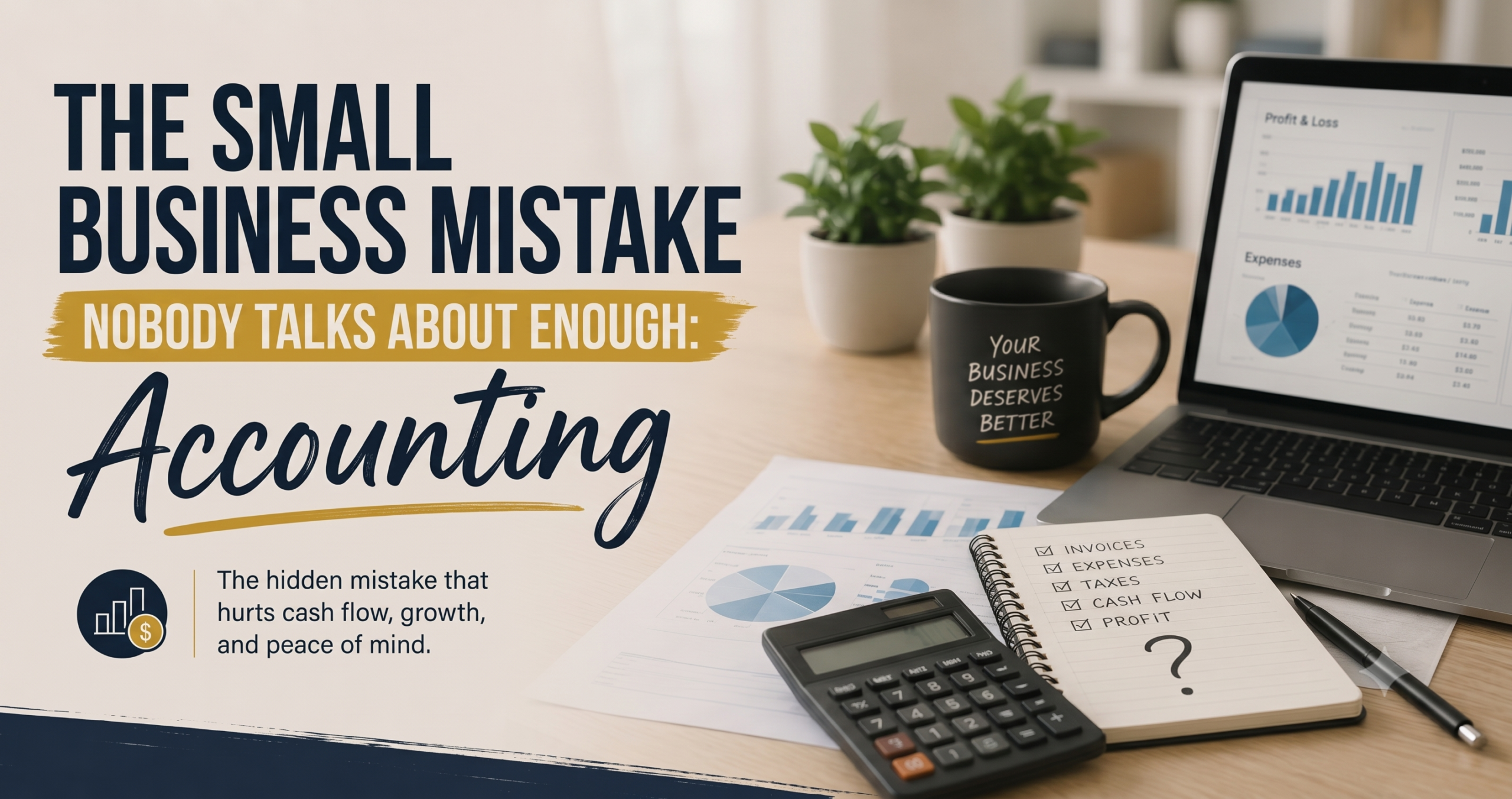
The Small Business Mistake Nobody Talks About Enough: Accounting

When people talk about growing a business, they usually talk about sales.
How to get more customers.
How to market better.
How to improve products.
How to build a stronger brand.
All important conversations.
But there is another conversation that doesn’t happen nearly enough among small business owners, especially women running businesses from home.
Accounting.
Not because it is boring.
Not because it is complicated.
But because most of us never started our businesses thinking we would need to understand numbers.
We started because we had a skill.
A product.
A passion.
A dream.
And somewhere between creating, selling, packing orders, replying to customers, managing homes, and balancing everyday life, accounting quietly became something we promised ourselves we would “figure out later.”
The problem is that later often comes with consequences.
The Hidden Chain Reaction
One of the most common mistakes small businesses make is operating without a clear understanding of their numbers.
At first, everything feels fine.
Orders are coming in.
Products are selling.
Customers seem happy.
But behind the scenes, a different story may be unfolding.
Stock starts increasing.
Money gets tied up in inventory.
Purchasing decisions become emotional rather than strategic.
And before you realise it, even a business that appears to be growing begins to feel financially heavy.
This is one of the biggest reasons many entrepreneurs constantly feel like they are working hard without seeing enough financial progress.
The issue isn’t always revenue.
Sometimes it is visibility.
You simply cannot manage what you do not track.
Why Every Business Owner Should Understand Basic Accounting
This doesn’t mean you need to become an accountant.
It doesn’t mean you need to study finance.
And it certainly doesn’t mean you need expensive software from day one.
But every business owner should understand a few basic things:
- How much inventory they are holding
- Which products are selling fastest
- Which products move slowly
- How much money is currently blocked in stock
- Monthly income versus monthly expenses
- Profit versus revenue
- Cash available for reinvestment
These numbers tell a story.
They help you make decisions based on facts instead of assumptions.
And over time, those decisions compound into healthier business growth.
Simple Tools Can Make a Big Difference
Many entrepreneurs avoid accounting because they believe they need sophisticated systems.
The truth is, most businesses can begin with very simple tools.
Google Sheets can help track inventory and expenses.
Notion can help organise business records and operational systems.
Vyapar offers useful invoicing and accounting features for small businesses.
Khata Book can help track payments and customer balances.
The goal is not perfection.
The goal is awareness.
Because awareness creates clarity.
And clarity creates better decisions.
Building Intentionally, Not Emotionally
As entrepreneurs, we naturally love creating.
We get excited by new ideas, new products, and new possibilities.
But sustainable businesses are built when creativity is supported by numbers.
The most successful founders are not necessarily the most talented creators.
They are often the ones who understand what their numbers are telling them and are willing to listen.
Accounting may not be the most glamorous part of running a business.
But it is one of the most essential.
Because once you understand your numbers properly, you stop guessing.
And when you stop guessing, you start growing intentionally.